
Start with the buying decision, not the products.
If you’re looking for the best electric scooters for adults, the expensive mistake is buying around one impressive number.
A 30-mph scooter isn’t automatically better for a daily commuter, just like a 50-mile range claim doesn’t mean much if the scooter is miserable to carry. Price, rider weight, hills, road quality, range, charging and portability all change what “best” actually means.
Table of Contents
Our Top Picks — Best Electric Scooters for Adults
- Segway MAX G3 — Best Overall:
- Apollo Go Stellar — Best for Comfort & Rough Roads
- VMAX VX2 Pro GT — Best Long-Range Commuter
- INMOTION Climber — Best for Hills & Heavy Riders
- NIU KQi Air — Best Lightweight Electric Scooter
At number five, we have the NIU KQi Air Electric scooter for adults
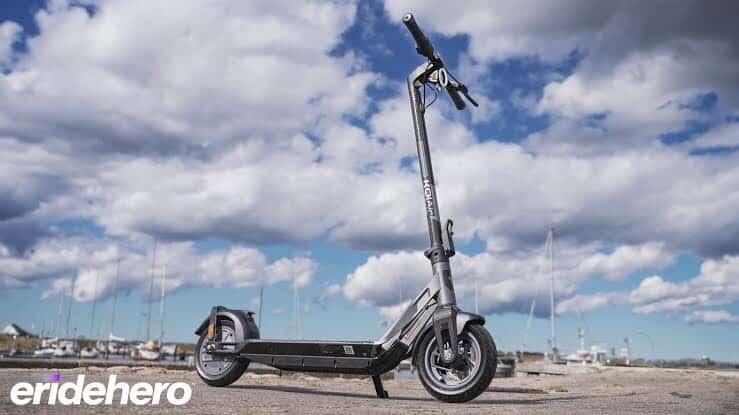
At around the $800 price range when discounted, this is interesting because you’re buying something unusually light rather than simply buying more motor. At 26.2 pounds, the KQi Air is dramatically easier to carry than the 45-to-55-pound scooters above it, and for an adult who lives upstairs or takes the scooter into a car, that changes the ownership experience every single day.
The 350W motor, 20-mph top speed and 451.2Wh battery are enough for normal city commuting, while the claimed 31-mile range gives you useful distance without forcing you to carry a huge battery. But that range is a ceiling, not a promise. Ride fast, climb hills or carry a heavier rider and the distance comes down, which is why I see this as a short-to-medium urban commuter rather than a long-range machine.
The 20-percent hill rating is reasonable for city riding, but it’s also where I’d draw the line. If your route has serious elevation, I’d rather accept more weight and move to a dual-motor scooter. The KQi Air’s 9.5-inch pneumatic tires help smooth ordinary pavement, but without dedicated suspension, rough roads expose the price you pay for that 26-pound weight.
And that’s why it’s number five, not number one.
It’s not trying to do everything. It’s trying to be a genuinely usable adult commuter that you won’t hate carrying.
That makes the KQi Air a strong choice when portability is your biggest problem, but the moment hills, rough roads or long-distance range become more important, the extra weight of the next scooter starts earning its place.
At number four, we have the INMOTION Climber Electric scooter for adults
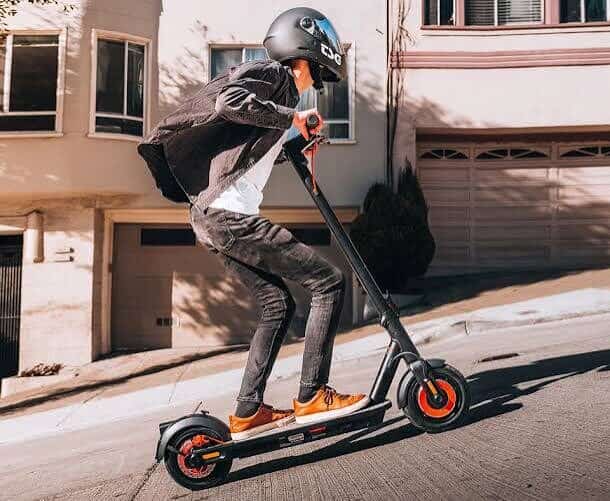
This is where the ranking changes because the Climber makes a very different argument for your money. Around the $600 range when discounted, you’re getting a dual-motor platform designed around something a lightweight commuter cannot do nearly as well: climb.
Two 750W motors provide up to 1,500W peak output, and INMOTION claims a 36-percent climbing capability with a payload around 286 pounds. Those numbers matter because the problem with hills isn’t simply reaching a certain top speed; it’s maintaining useful speed when gravity, rider weight and acceleration are all working against the motor.
That’s where dual motors stop being a specification and become something you actually feel.
The 533Wh battery claims up to 35 miles, although I’d keep the same reality check here: heavier riders, higher speeds and repeated hill climbs will reduce that figure. You’re also carrying roughly 47 pounds, so compared with the KQi Air, the Climber asks you to give up portability in exchange for much stronger climbing performance.
For the right rider, that’s a trade I’d gladly make. If I had steep roads outside my house every morning, I’d rather carry a heavier scooter occasionally than spend every commute watching a single motor struggle uphill.
The 10-inch pneumatic tires help with everyday road imperfections, but there’s no full suspension, so the Climber isn’t suddenly a rough-road comfort scooter. Its job is different. It’s built to maintain momentum on hills while still offering enough range for practical commuting.
That’s why it moves above the NIU for a heavier or hill-bound rider, but not higher overall. If your route is flat, the dual motors and extra weight aren’t solving your biggest problem.
And that leads naturally to the
VMAX VX2 Pro GT electric scooter for Adults at number three,
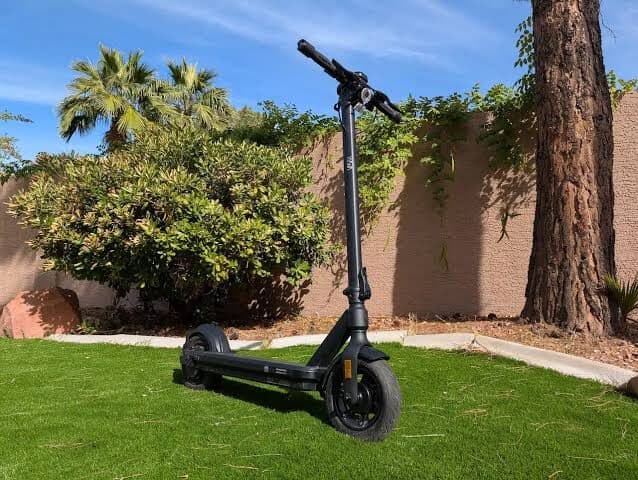
because now we’re looking at what happens when distance matters more than climbing.
At roughly $800, the VX2 Pro GT puts a 768Wh battery into a scooter that still weighs around the mid-40-pound range. That’s a useful combination for an adult commuter because you get considerably more battery capacity without jumping straight into a scooter that’s nearly impossible to move.
The 24-mph top speed and roughly 287-pound payload make it practical for larger riders, while the claimed 37-mile range gives the battery enough reserve for longer trips. But again, don’t treat the headline range as your personal number. Speed is one of the biggest variables, and a heavier rider accelerating hard or climbing frequently will consume considerably more energy.
The 500W continuous motor with up to 1,300W peak output is enough for everyday riding and moderate hills, but this is not the scooter I’d choose for a steep route when the Climber is available. That difference is important because the VMAX is spending its weight and battery budget differently.
You’re buying distance.
The 10-inch tubeless pneumatic tires give you some cushioning, and the simpler braking setup keeps maintenance reasonable, but the lack of suspension is the obvious compromise. On decent pavement, I don’t consider that a deal breaker at this price. On broken roads every morning, I’d rather spend more on suspension than carry a larger battery I don’t fully need.
That’s what puts it at number three.
For a long, mostly smooth commute, I’d trust the VMAX more than a heavier performance scooter because the battery capacity is being used where you’ll actually benefit from it.
But once comfort and road quality become equally important, the next step starts making sense.
At number two, we have the Apollo Go Stellar Electric scooter for adults
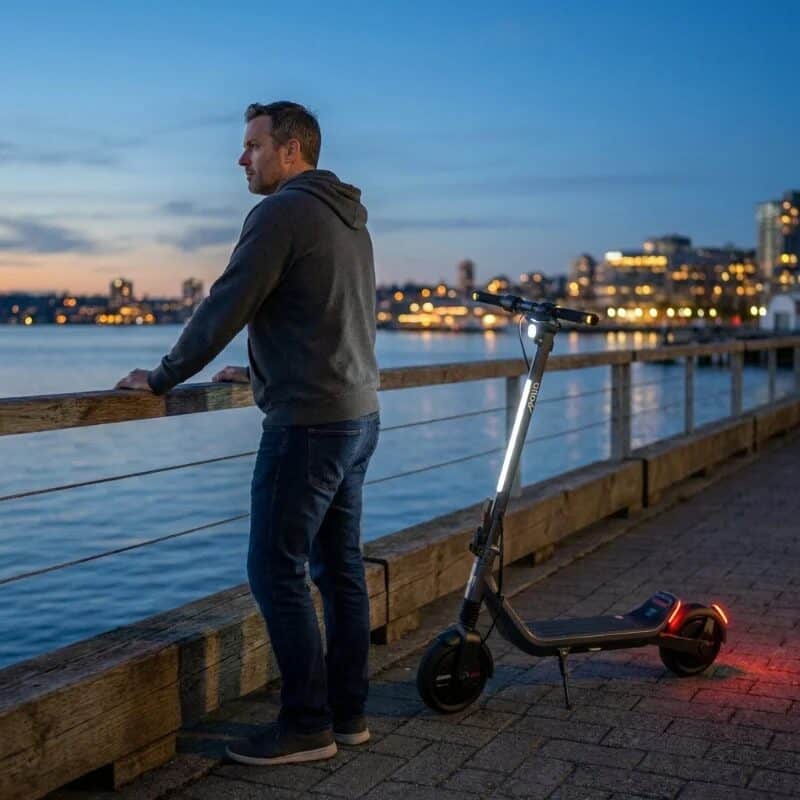
This is the point where I’d stop asking whether the scooter is merely capable and start asking how much better it makes a difficult commute.
At around $1,200, it’s considerably more expensive than the VMAX. That price only makes sense if you’re going to use the hardware you’re paying for. Here, the reason is clear: dual Bosch motors, front and rear suspension and self-healing tubeless tires.
The claimed 32-mph top speed and 25-degree climbing capability give it the performance to deal with hills, but the suspension is what separates it from the cheaper options when the pavement is bad. Cracks, potholes and broken asphalt become less punishing because the suspension is absorbing movement instead of making your body do all the work.
That’s a difference you’ll feel long after you’ve forgotten the specification sheet.
The 38-mile maximum range is an Eco-mode figure, so I wouldn’t compare it directly with another scooter’s maximum and assume they’re equivalent. Real range depends on speed, rider weight, terrain and temperature. The battery takes around 7.5 hours with standard charging, while faster charging is available.
The 265-pound payload also matters. If you’re already close to that figure before adding a backpack, I’d want more headroom rather than operating at the limit.
And then there’s the 55-pound weight.
I’m not going to pretend that’s portable.
If you’re carrying the scooter upstairs every morning, the Apollo is probably the wrong answer. But if it stays in a garage or elevator-access building, that weight becomes much easier to justify because you’re not carrying it around; you’re benefiting from the hardware every time you ride.
That’s why I rank it above the VMAX. You’re paying substantially more, but you’re buying a much more controlled ride on bad roads while keeping strong motor performance.
And then we reach number one.
At number one, we have the Segway MAX G3.
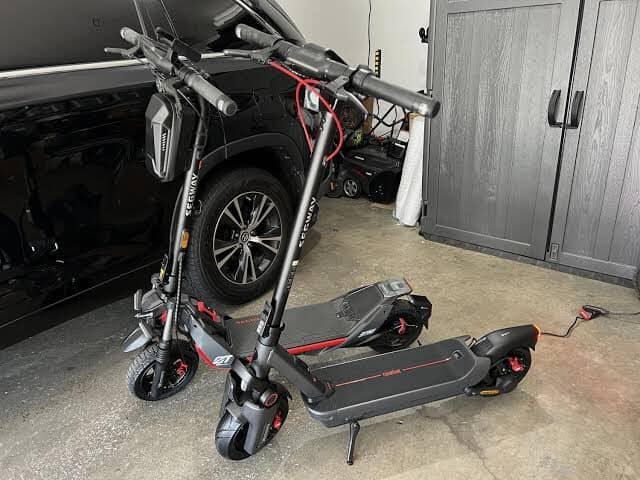
This is not the cheapest scooter here, and it’s not the lightest. That’s actually why I like the ranking. The MAX G3 doesn’t win by dominating one specification. It wins by making fewer compromises across the things most adult riders actually care about.
Around the $1,000 price point when discounted, it sits in a difficult part of the market, so the hardware has to justify that money. A 2,000W maximum-power system, roughly 28-mph top speed, 597Wh battery, up to 50 miles of claimed range, 286-pound payload, 11-inch self-sealing tires and hydraulic suspension give it a remarkably broad capability.
The 50-mile claim still needs context. Segway’s range depends heavily on riding mode and test conditions, so I wouldn’t plan a real commute around getting 50 miles at high speed. What matters is that the scooter has enough battery reserve for normal commuting while also giving you the performance and hardware to deal with hills and imperfect roads.
The hydraulic suspension is a major part of the appeal. The 11-inch tires help it roll over smaller imperfections, while the suspension controls the movement when the road gets worse. That makes the MAX G3 more versatile than a scooter that simply has a bigger motor or larger battery.
Charging is another advantage. Segway lists roughly 3.5 hours with one charger and around 2.5 hours with dual charging, so heavy riders and frequent commuters aren’t stuck waiting through most of a day to recharge.
The braking package, traction control, stability systems and high rider capacity reinforce the same idea. This isn’t built around one flashy feature. The pieces work together.
But there’s a catch, and I wouldn’t hide it from you.
At roughly 54 pounds, this is not something I’d recommend carrying upstairs every day.
If portability is your priority, number one for you might actually be number five.
That’s the whole reason I don’t think a good ranking should pretend there’s one perfect scooter for every adult.
The KQi Air wins when carrying weight is the problem. The Climber wins when hills are the problem. The VMAX makes the strongest case when long-distance range matters more than suspension. The Apollo makes sense when rough roads justify spending more.
The MAX G3 wins overall because it covers the widest range of those situations without asking you to accept a major weakness in return.
So if I were spending my own money, that’s how I’d approach the best electric scooters for adults.
Not by asking which scooter has the biggest number.
I’d ask which compromise I can live with every single day.
Because the best electric scooter isn’t the one that looks impressive when you first buy it.
It’s the one that still feels like the right decision after you’ve ridden it for months.
Electric Scooter Buying Guide for Adults
Finding the best electric scooter for adults is less about chasing the highest top speed and more about matching the scooter to your actual commute.
A short, flat trip does not need the same hardware as a 15-mile ride over hills and broken pavement.
Current buying guides consistently point to range, terrain, rider weight, portability, tires, suspension, braking, charging and price as the factors that matter most. (Pure Electric)
Start With Your Real Riding Distance
Don’t buy based on the advertised maximum range alone. Think about your longest normal round trip, then leave a buffer.
If your commute is short and predictable, you don’t need to pay for an enormous battery. For longer commutes, the extra battery capacity becomes valuable because real-world range falls with higher speeds, hills, rider weight, cold temperatures and frequent acceleration. Testing of the Segway MAX G3, for example, found a substantial difference between its advertised maximum and aggressive real-world riding range. (Tom’s Guide)
For most adult commuters, I’d rather have comfortable range remaining at the end of the trip than squeeze every last mile from the battery.
Match Motor Power to Your Route
Motor power matters most when your route includes hills or a heavier rider.
A 350W-class scooter can make sense for relatively flat urban commuting. Once hills become a daily problem, stronger motors or dual-motor systems become much more useful. That’s why the INMOTION Climber makes sense for a completely different buyer than the lightweight NIU KQi Air.
Don’t buy extra motor power simply because the specification looks impressive. Buy it when your terrain actually demands it.
Consider Your Weight, Not Just the Payload Rating
Check the manufacturer’s maximum rider weight before buying.
Then remember that your backpack, work equipment and anything else you’re carrying adds to the load. A scooter operating close to its maximum capacity won’t necessarily feel the same as it does with a lighter rider.
For electric scooters for heavy adults, I’d prioritize payload capacity, motor torque, braking performance, tire size and battery capacity together rather than looking at maximum weight alone.
Weight Matters More Than You Think
This is one of the easiest buying factors to overlook.
A 25-pound scooter and a 55-pound scooter can both fold, but they are not equally portable.
If you’re carrying the scooter upstairs, taking it onto public transportation or putting it into a car regularly, weight should be near the top of your checklist. That’s where something like the NIU KQi Air makes more sense.
If your scooter lives in a garage or elevator-access building, a heavier model with suspension and a larger battery becomes much easier to justify.
Folding does not automatically mean portable.
Suspension vs. Solid Tires vs. Pneumatic Tires
For smooth pavement, you can get away with a simpler setup.
For cracked asphalt, potholes and rough urban streets, suspension becomes much more valuable. Larger pneumatic tires can also provide useful cushioning, while self-healing tubeless tires can reduce the inconvenience of smaller punctures.
If you’re searching for the best electric scooter for rough roads, don’t focus only on motor power. Look at the complete ride system: suspension, tire size, tire construction, deck stability and braking.
Range Is Not the Same as Battery Size
Battery capacity is usually expressed in watt-hours, or Wh.
A larger Wh figure generally gives you more energy available, but it doesn’t guarantee a specific distance. Rider weight, speed, hills and weather all affect consumption.
This is why electric scooter range should be evaluated alongside battery capacity rather than treated as a single number.
If you’re comparing two long-range electric scooters, look at battery size, realistic riding speed and charging time together.
Think About Charging Before You Buy
For a daily commuter, charging convenience can matter almost as much as range.
If you’re riding 10 miles each way, a scooter that comfortably covers your round trip can simply charge overnight.
If you’re riding throughout the day, fast charging becomes much more valuable. The Segway MAX G3, for example, supports significantly faster charging with its dual-charger setup. (Tom’s Guide)
So the best electric scooter for commuting isn’t necessarily the one with the biggest battery. It’s the one that fits your daily charging routine.
Don’t Ignore Brakes and Visibility
Speed gets the marketing attention, but stopping matters more.
Look for dependable mechanical braking combined with electronic or regenerative braking where appropriate. For commuting in traffic, lighting and visible turn signals also matter.
I’d give extra attention to these features if you’re riding at night or around cars regularly.
Water Resistance Needs Context
An IP rating can tell you how resistant a scooter is to dust or water under specified conditions, but it doesn’t mean the scooter is designed to be submerged or ridden through deep standing water.
If you regularly ride in wet weather, check the manufacturer’s limitations instead of assuming a high IP rating makes everything safe.
What Should You Spend?
The cheapest scooter isn’t necessarily the best value.
A lower-priced model can be perfectly sensible for short, flat trips. Spending more becomes easier to justify when you’re buying something meaningful: a larger battery, stronger hill performance, better suspension, higher payload capacity, faster charging or better build quality.
That’s why I’d compare price versus capability, not price versus specifications.
For example, the NIU makes its case through low weight. The INMOTION Climber makes its case through hill performance. The VMAX emphasizes battery capacity. The Apollo focuses heavily on suspension and performance. The Segway MAX G3 combines several of those capabilities.
The right value depends on which problem you’re paying to solve.
Which Type of Adult Rider Should Buy Each?
For lightweight commuting: NIU KQi Air.
Best when portability, storage and carrying weight matter most.
For hills: INMOTION Climber.
Best when steep roads and rider weight make single-motor scooters struggle.
For long-range commuting: VMAX VX2 Pro GT.
Best when battery capacity and reasonable scooter weight matter more than suspension.
For rough roads: Apollo Go Stellar.
Best when suspension, tires and ride comfort justify the higher price.
For the best overall package: Segway MAX G3.
Best when you want strong range, suspension, performance and rider capacity and don’t need to carry the scooter frequently.
The important thing is not to choose the “best” scooter in isolation. Choose the one whose compromises fit your life.
FAQs About Electric Scooters for Adults
What is the best electric scooter for adults?
The Segway MAX G3 is a strong overall choice for adults who want a combination of range, performance, suspension, rider capacity and charging speed. But the best electric scooter for you depends on your terrain, distance, weight, budget and whether you need to carry it regularly.
What is the best electric scooter for commuting?
For commuting, prioritize realistic range, comfortable tires, reliable brakes, lighting, charging time and manageable weight. The VMAX VX2 Pro GT is particularly interesting for longer, smoother commutes, while the Apollo Go Stellar makes more sense when road quality is poor.
What is the best long-range electric scooter for adults?
The Segway MAX G3 is one of the strongest long-range options in this group, with a claimed range of up to 50 miles. However, maximum advertised range should not be confused with normal real-world range. Independent testing has shown how dramatically riding style can change the distance available. (Tom’s Guide)
What is the best electric scooter for heavy adults?
Look for a high maximum rider weight, strong motor torque, good brakes, larger tires and enough battery capacity. The INMOTION Climber and Segway MAX G3 both offer payload capacities around the 285-pound range, making them more suitable for larger adult riders than many lightweight commuter scooters.
What is the best electric scooter for hills?
The INMOTION Climber is designed specifically around hill performance, using dual motors to provide substantially more climbing power than a typical single-motor commuter scooter.
Are electric scooters good for adults?
Yes, particularly for short urban trips and commuting where local laws permit their use. The important question is choosing a scooter designed for your adult rider weight, route, distance and road conditions rather than buying a small entry-level model designed around lighter riders.
How far can an adult electric scooter go on one charge?
It depends heavily on the model and riding conditions. Advertised range can vary substantially from real-world results because speed, rider weight, hills, temperature and acceleration all affect battery consumption.
How much does a good adult electric scooter cost?
A useful adult commuter can cost several hundred dollars, while higher-performance models can reach or exceed $1,000. The better question is what you’re getting for the additional money: more range, stronger motors, suspension, higher payload, faster charging or better durability.
Is a 20 mph electric scooter fast enough for adults?
For many urban commutes, 20 mph is already plenty. Higher top speed can be useful in appropriate environments, but it also increases energy consumption and puts greater importance on braking, tires, suspension and rider control.
How much motor power does an adult electric scooter need?
For flat urban riding, a moderate single motor can be enough. Heavier riders and hilly routes benefit from more torque and, in demanding conditions, dual motors. Don’t choose motor wattage in isolation; rider weight, terrain and battery capacity all affect actual performance.
Are electric scooters with suspension worth it?
If you ride on rough pavement, yes. Suspension can substantially improve comfort and control over potholes, cracks and uneven surfaces. For short rides on smooth pavement, you may prefer a lighter scooter without suspension.
What tire size is best for an adult electric scooter?
Larger tires generally provide better stability and can roll over small road imperfections more easily. Around 10 to 11 inches is common on larger adult commuter scooters, while smaller tires can help keep a scooter lighter and more compact.
What should I look for when buying an electric scooter?
Focus on real-world range, battery capacity, motor power, rider weight limit, top speed, tire size, suspension, braking, charging time, scooter weight, water resistance, build quality and price. Also check local laws and whether replacement parts and service are available.
Is a heavier electric scooter better?
Not automatically. Extra weight can mean a larger battery, stronger motors, suspension and bigger tires, but it also makes the scooter harder to carry. If portability matters, a lighter scooter may be the better purchase even if it has fewer performance features.
Should I buy a single-motor or dual-motor electric scooter?
Choose a single motor for simpler, flatter commuting when you don’t need extreme acceleration. Dual motors make more sense for steep hills, heavier riders and riders who want stronger acceleration. They’re also heavier and usually more expensive, so there’s little reason to pay for them if your route doesn’t require the extra power.
What is the most important feature in an electric scooter?
There isn’t one universal feature. For a short commute, weight and reliability may matter most. For hills, motor torque matters. For long-distance riding, battery capacity and charging matter. For rough roads, suspension and tires matter. The best electric scooter for adults is the one that solves your biggest daily problem without creating a new one.
Are advertised electric scooter ranges accurate?
They’re useful as a comparison point, but don’t assume you’ll achieve the maximum number. Manufacturer range testing uses specific conditions, and real riding introduces hills, wind, rider weight, traffic, acceleration and higher speeds. For buying decisions, leave a meaningful range buffer rather than planning to arrive with an almost empty battery.
What is the best electric scooter for a first-time adult buyer?
A first-time buyer should generally favor predictable handling, reliable brakes, useful lighting, adequate range and a manageable weight instead of chasing extreme speed. A well-rounded commuter scooter is usually easier to live with than a high-performance model built primarily around acceleration.
What safety features should an adult electric scooter have?
Prioritize dependable brakes, effective lighting, visible turn signals where available, stable tires, a secure deck, appropriate rider capacity and sensible speed control. Wear a properly fitted helmet and follow the riding and equipment requirements that apply where you live.
Bottom line: don’t buy an electric scooter because one specification looks impressive. Match price, range, rider weight, terrain, comfort, portability and charging to the way you actually ride. That’s how you find the right electric scooter instead of simply buying the most expensive one. (Pure Electric)