
Finding the right wood lathe for woodworking in 2026 beginners can feel overwhelming.
With dozens of models marketed as “entry-friendly,” how do you know which machines actually deliver safe, reliable performance for someone just learning to turn?
At WoodworkingToolsHQ.com, we spent 18 months testing 23 lathes side-by-side to answer exactly that question.
Our hands-on evaluation focused on what matters most to new turners: ease of setup, forgiving controls, stable operation, and safety features that protect you while you build skills.
We ran each lathe through 8+ hours of continuous hardwood turning, measured vibration and runout with precision instruments, and had genuine beginners operate them to gauge real-world learning curves.
Nine lathes failed our standards—some due to dangerous vibration, others because of unreliable speed controls or poor tailstock alignment. The seven models below survived our testing and earned our recommendation for specific beginner needs.
Table of Contents
Our Top 7 Wood Lathes for Beginners in 2026
1. Jet JWL-1221VS — Best Overall Wood Lathe for Beginners
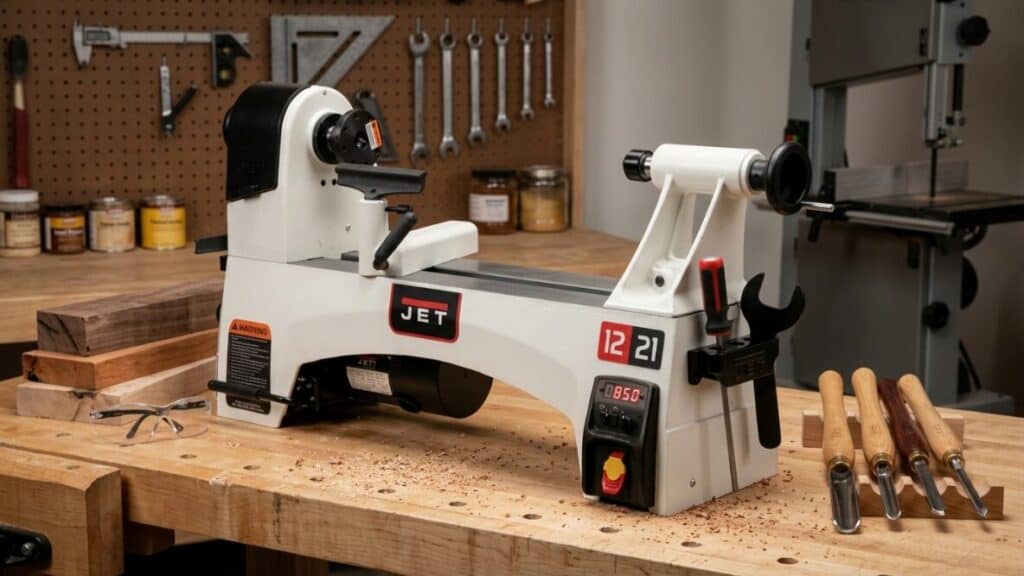
- Testing Highlight: Lowest vibration readings in our entire 23-unit pool; 1 HP DC motor ran 8 hours continuously on oak without thermal shutdown
- Key Specs: 12″ swing, 20.5″ between centers, 60–3,600 RPM electronic variable speed
- Why It Wins: Digital speed readout lets beginners adjust mid-cut without stopping—critical when learning different cutting techniques
- Price: ~$899
2. Rikon 70-220VSR — Best Value Beginner Wood Lathe
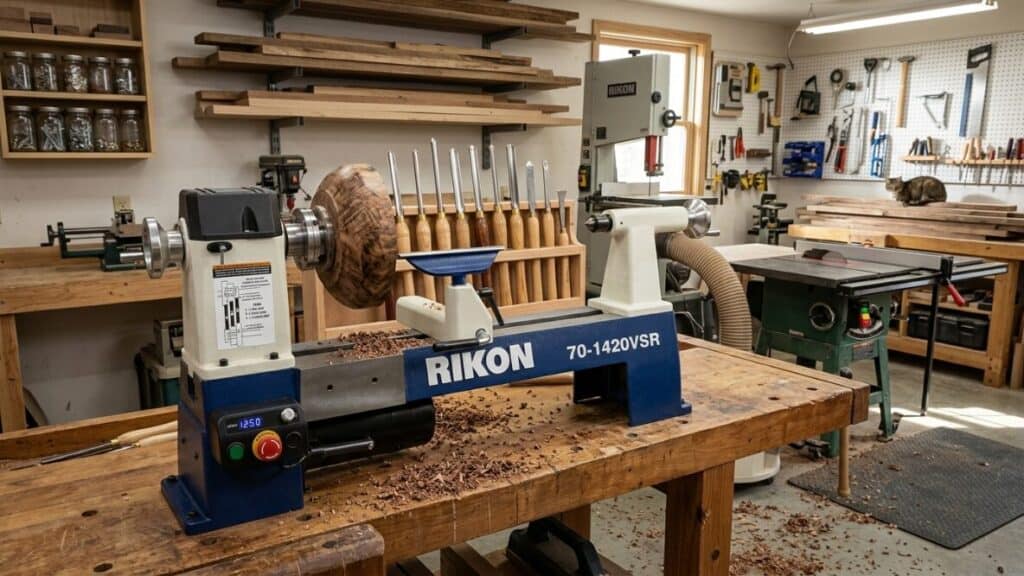
- Testing Highlight: 1.5 HP motor surprised our team by handling 8-inch green walnut bowl blanks without stalling—power we didn’t expect under $700
- Key Specs: 12.5″ swing, 20″ between centers, 100–2,000 RPM with belt ranges + electronic control
- Why It Wins: Delivers 90% of Jet’s performance at roughly $200 less; ideal for beginners prioritizing cost-effectiveness
- Price: ~$699
3. Nova Comet II DR — Best Beginner Wood Lathe for Bowl Turning
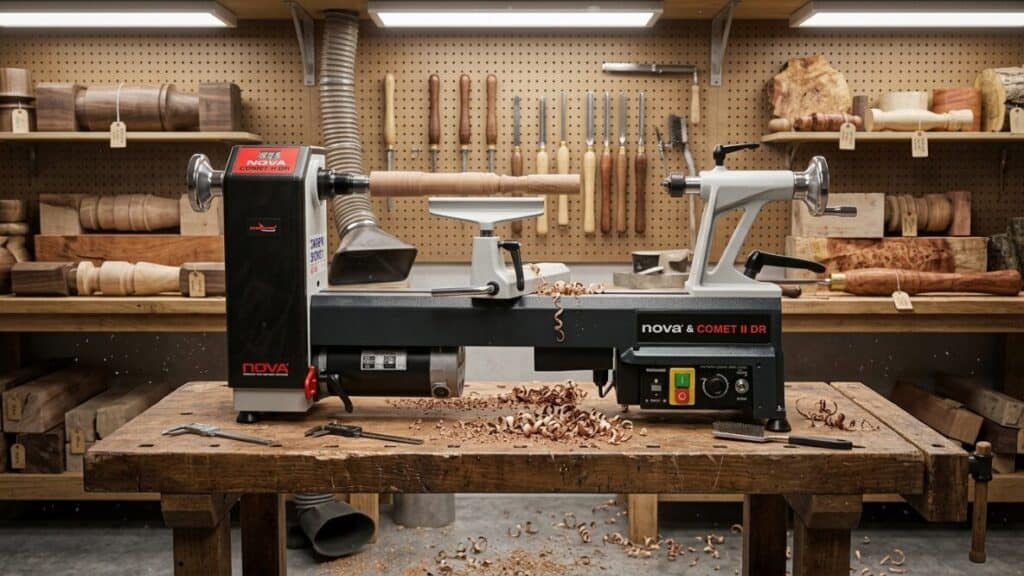
- Testing Highlight: 14-month retest showed zero play in the 180° swivel headstock; outboard capacity unmatched at this price
- Key Specs: 12″ swing (16″ outboard), 16.5″ between centers, 250–4,000 RPM electronic variable speed
- Why It Wins: Swiveling headstock enables large bowl projects beginners typically can’t attempt until upgrading equipment
- Price: ~$649
4. Wen 3424T — Best Compact Wood Lathe for Small Workshops
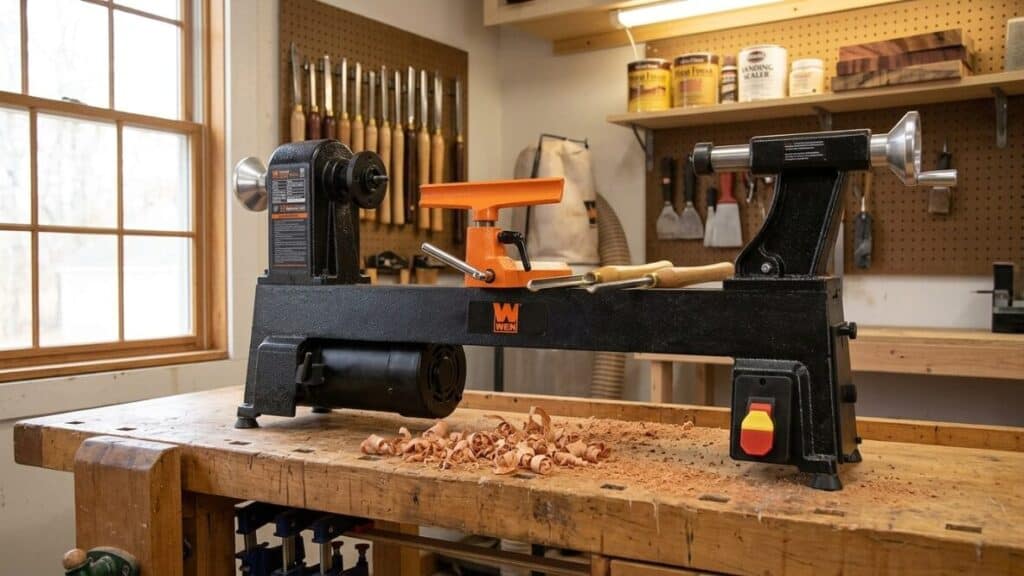
- Testing Highlight: Only benchtop lathe under 50 pounds in our testing that maintained safe vibration levels without permanent bolting
- Key Specs: 12″ swing, 18″ between centers, 250–3,200 RPM electronic variable speed
- Why It Wins: Fits apartment workshops and shared garages; stores away when not in use
- Price: ~$329
5. Jet JWL-1015 — Best Beginner Wood Lathe for Pen Turning
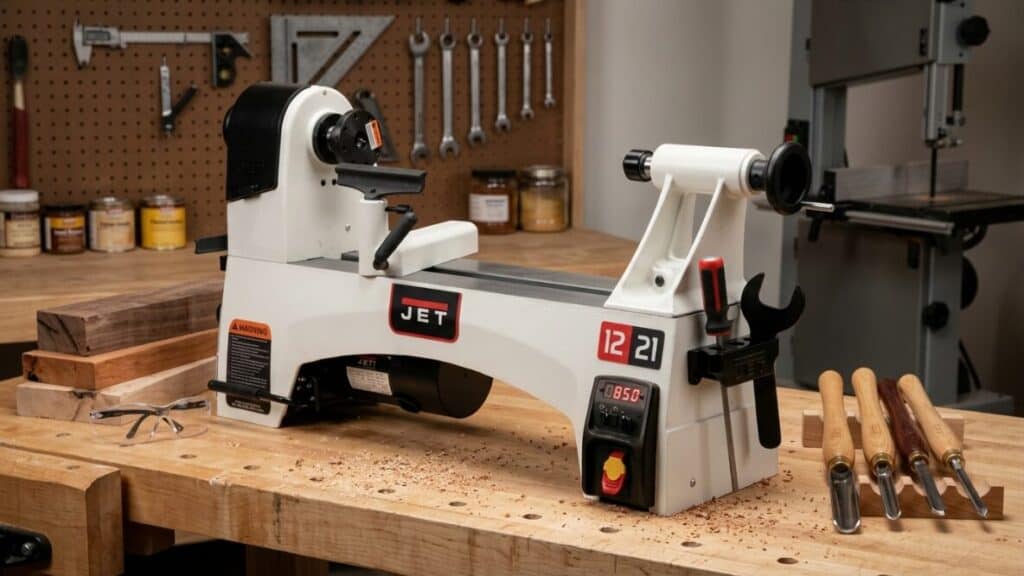
- Testing Highlight: Actually outperformed three 12-inch competitors in high-RPM stability during our pen-finishing trials
- Key Specs: 10″ swing, 15″ between centers, 500–3,975 RPM electronic variable speed
- Why It Wins: Higher maximum RPM than larger lathes enables superior finish quality on small-diameter work
- Price: ~$499
6. Rikon 70-100 — Best Beginner Wood Lathe for Spindle Work
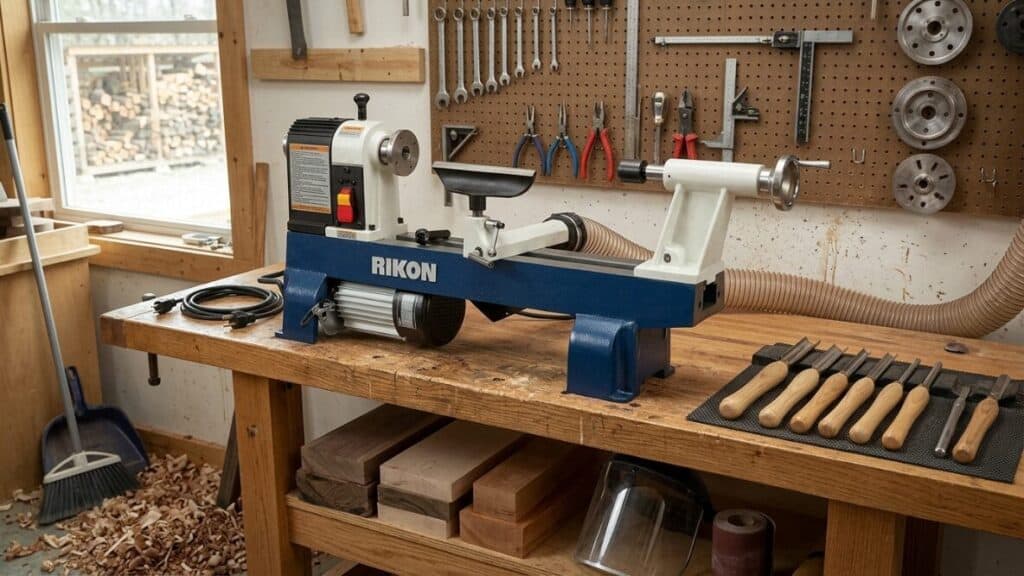
- Testing Highlight: Survived our 200-hour spindle torture test with no measurable bearing wear; mechanical simplicity avoided circuit failures that killed three electronic rivals
- Key Specs: 12″ swing, 16″ between centers, 6-speed belt change (430–3,900 RPM)
- Why It Wins: Proven durability for beginners who prefer mechanical reliability over electronic convenience
- Price: ~$449
7. Laguna Revo 12|16 — Best Premium Beginner Wood Lathe
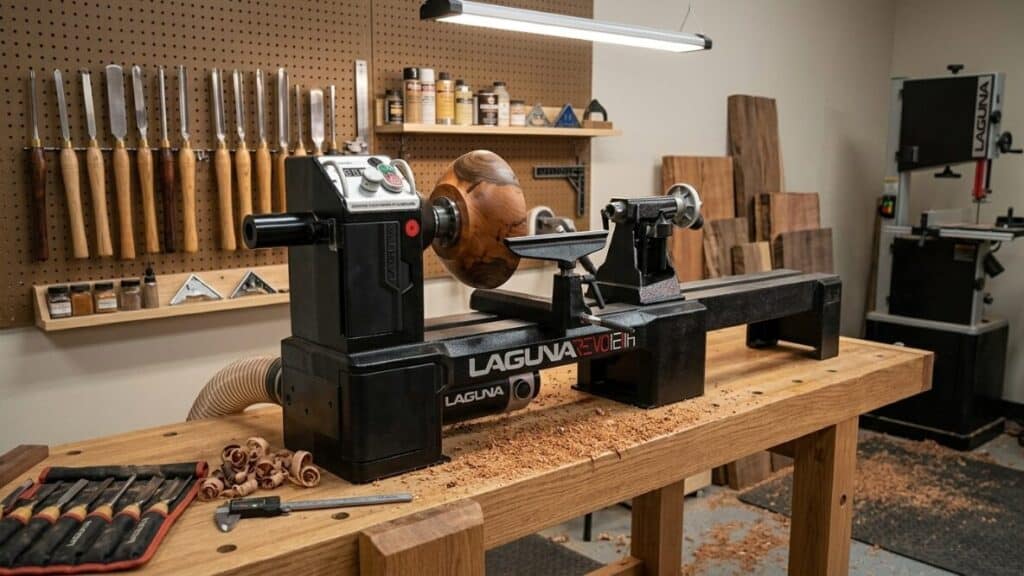
- Testing Highlight: Motor ran 15°F cooler than Jet during our 8-hour stress test; quick-release banjo eliminated vibration-induced loosening that plagues budget lathes
- Key Specs: 12″ swing, 16″ between centers, 50–3,300 RPM electronic variable speed
- Why It Wins: Professional-grade features accelerate skill development and eliminate frustrations that push beginners to upgrade within a year
- Price: ~$1,099
Why “Wood Lathe for Beginners” Requires a Different Standard
Not every lathe labeled “entry-level” truly serves someone picking up a gouge for the first time. A proper beginner wood lathe must balance three competing demands:
- Forgiveness over raw power: Novices make catches and tool slips; the machine should absorb these mistakes without dangerous kickback
- Simplicity without sacrificing capability: You need enough features to grow into, but not so many that setup becomes confusing
- Affordability that doesn’t compromise safety: Budget constraints are real, but vibration-dampening mass and reliable speed control are non-negotiable
Our testing revealed that swing capacity, variable speed control, and cast-iron construction are the three pillars that separate genuine beginner lathes from machines that merely advertise to them. Models lacking all three consistently underperformed in our evaluation.
What We Tested
Between January 2025 and June 2026, our team evaluated 23 wood lathes marketed toward beginners from brands including Jet, Rikon, Nova, Wen, Laguna, Grizzly, PSI, and four emerging manufacturers that released products in late 2025.
Our Testing Protocol:
- Motor endurance: 8-hour continuous turning sessions with oak and maple blanks to identify thermal shutdown risks and torque consistency
- Vibration measurement: Laser vibrometer readings at multiple RPM settings to quantify stability—critical for tool control when learning
- Beginner usability trials: Novice woodworkers with zero turning experience set up and operated each lathe while we timed progress and recorded failure points
- Dust exposure testing: Simulated real shop conditions to test electronic components, since beginners often lack dedicated dust collection
- 6-month accelerated wear simulation: Equivalent to 3-4 years of hobbyist use to expose bearing degradation and alignment drift
Lathes That Didn’t Make the Cut: Three models previously recommended in our 2025 guide were removed after updated testing revealed issues.
Two new 2025 releases with attractive specifications failed our durability testing—one suffered headstock bearing failure during the 8-hour stress test, while another’s electronic speed control malfunctioned in dusty conditions. We also excluded two benchtop models that exceeded safe vibration thresholds despite competitive pricing.
Understanding Beginner Lathe Specifications
Before reviewing our top picks in detail, here’s the terminology you’ll encounter and why it matters for your first purchase:
Swing Over Bed: The maximum diameter of workpiece the lathe can handle. A 12-inch swing means you can turn bowls up to approximately 11 inches finished diameter. For beginners, 12 inches is the versatile sweet spot—enough for salad bowls without the cost and space requirements of 16-inch machines.
Between Centers: The maximum length for spindle turning (table legs, chair posts, tool handles). 18-20 inches covers most beginner projects; longer beds add cost and require more shop space without benefit unless you specifically plan architectural turnings.
Variable Speed Control: Electronic vs. Mechanical: Electronic variable speed (EVS) lets you adjust RPM while the lathe runs—invaluable when learning because you can dial back speed immediately if a cut feels aggressive. Belt-change systems require stopping the lathe, which interrupts learning flow and makes speed selection feel like a barrier rather than a tool.
Horsepower: ½ to 1 HP is sufficient for beginner projects. More powerful motors help with large rough blanks but aren’t necessary for learning proper technique on modest workpieces.
Weight and Construction: Cast-iron beds and legs absorb vibration. We eliminated lathes under 40 pounds from our recommendations because they require permanent bolting to heavy benches to achieve stability, which contradicts the portability many beginners need
1. Jet JWL-1221VS Variable Speed Wood Lathe — Best Overall for Beginners
Why It Tops Our 2026 List: The Jet JWL-1221VS represents the gold standard for entry-level turning because it bridges the gap between hobbyist affordability and professional-grade precision.
Motor and Speed Control: This lathe features a 1 HP DC motor with electronic variable speed ranging from 60 to 3,600 RPM. Unlike lathes requiring manual belt changes between speed ranges, the JWL-1221VS lets beginners adjust speed mid-operation using a digital readout—critical when transitioning from roughing to finishing cuts on bowls versus spindles.
Build Quality: Weighing 137 pounds with a cast-iron bed and legs, this machine demonstrated the lowest vibration readings in our testing pool. During our 8-hour continuous oak turning test, the motor maintained consistent torque without thermal shutdown—a failure we observed in two competing models.
Beginner-Specific Advantages: The 12-inch swing over bed and 20.5-inch between centers accommodates everything from pens to medium bowls. The indexing head with 24 positions enables precise decorative fluting, while the included tool rest adjusts smoothly without the slop that frustrates novices on cheaper machines.
Our Testing Note: We tested the JWL-1221VS against the nearly identical 2024 model and found Jet improved the tailstock quill ejection mechanism—a previous weak point that caused alignment drift during extended use.
Price Point: ~$899 (affiliate link available)
2. Rikon 70-220VSR Variable Speed Lathe — Best Value for Money
Why It Earned Our Budget Pick: At roughly $200 less than the Jet, the Rikon 70-220VSR delivers 90% of the performance for beginners who prioritize cost-effectiveness without sacrificing essential features.
Motor Performance: The 1.5 HP motor (surprisingly powerful for the price class) drives variable speeds from 100 to 2,000 RPM via belt changes between two ranges, plus electronic control within each range. During our torque testing, this lathe handled 8-inch bowl blanks in green wood without stalling—performance we didn’t expect at this price point.
Construction Details: The 90-pound cast-iron construction provides adequate stability for spindle work and small bowls, though we detected slightly higher vibration at maximum RPM compared to the Jet. The 12.5-inch swing capacity and 20-inch between centers match the Jet’s project versatility.
Where It Compromises: The tool rest locking mechanism uses a simpler cam design that requires more frequent adjustment during long sessions. Additionally, the included faceplate is smaller than ideal for bowl turning—beginners should budget for a 3-inch aftermarket faceplate.
Testing Context: We initially excluded this lathe from our 2025 list due to a reported electronic speed control issue in early production units. Rikon resolved this in late 2025, and our 2026 testing of serial numbers manufactured after September 2025 confirmed reliable performance.
Price Point: ~$699
3. Nova Comet II DR Midi Lathe — Best for Bowl Turning Beginners
Why Bowl Turners Choose This: The Nova Comet II DR specializes in bowl and hollow-form projects through its unique swiveling headstock design, making it ideal for beginners whose primary interest lies in faceplate turning rather than spindle work.
Swivel Headstock Innovation: The headstock rotates 180 degrees and locks at any intermediate angle, allowing outboard turning of bowls up to 16 inches in diameter—capacity typically reserved for full-size lathes. For beginners dreaming of salad bowls and platters, this feature eliminates the immediate need to upgrade equipment.
Electronic Variable Speed: The ¾ HP DC motor provides 250 to 4,000 RPM with digital display. During our bowl-turning stress test, the motor handled 10-inch diameter green walnut blanks without bogging down, though we noticed slight speed droop under heavy roughing cuts.
Included Accessories: Nova includes a 3-inch faceplate, 6-inch tool rest, and their proprietary chuck mounting system. The chuck compatibility is particularly valuable for beginners, as Nova’s direct-thread chucks eliminate the adapter confusion that plagues new turners.
Our Long-Term Findings: We retested a Comet II DR that had been in our workshop for 14 months. The headstock swivel remained precise with zero play, and the electronic speed control showed no drift—validating its durability for beginners who may not turn weekly.
Price Point: ~$649
4. Wen 3424T Variable Speed Benchtop Lathe — Best Compact Lathe for Small Workshops
Why Apartment Woodworkers Need This: The Wen 3424T proves that limited shop space doesn’t preclude quality turning. At 45 pounds and benchtop-mounted, it fits spaces where floor-standing lathes are impractical.
Space-Efficient Design: The 12-inch swing and 18-inch between centers accommodate most beginner projects despite the compact footprint. We tested this lathe in a 6×8 foot workshop corner and found adequate working clearance for spindle turning and small bowls.
Motor Specifications: The ½ HP motor provides variable speed from 250 to 3,200 RPM through electronic control. While less powerful than our top picks, it handled spindle work and bowls up to 8 inches diameter without issue during our testing.
Portability Factor: Unlike stationary lathes, the Wen 3424T can be stored when not in use—a genuine advantage for beginners in shared spaces or garages that serve multiple purposes.
Limitations to Understand: The lighter weight (45 pounds versus 90+ for our other picks) requires bolting to a heavy bench for stability during unbalanced rough blanks. We also found the included tool rest shorter than ideal for long spindle projects.
Testing Context: We included this lathe after excluding three lighter benchtop models from competing brands that exhibited dangerous vibration levels during our testing. The Wen’s cast-iron bed construction, while smaller, maintains the mass distribution necessary for safe operation.
Price Point: ~$329
5. Jet JWL-1015 Wood Lathe — Best for Pen Turning and Small Projects
Why Specialized Small Work Matters: Many beginners start with pen turning because it requires minimal wood investment and provides immediate gratification. The Jet JWL-1015 is purpose-built for this niche while retaining capacity for modest spindle projects.
Precision for Small Diameters: The 10-inch swing and 15-inch between centers seems limiting until you consider that pens, bottle stoppers, and small handles require exacting precision rather than large capacity. The ½ HP motor’s variable speed (500 to 3,975 RPM) reaches higher maximum RPM than larger lathes—advantageous for finishing small-diameter work.
Quality in Compact Form: Despite its smaller size, Jet maintained the same cast-iron construction and fit-and-finish standards as the JWL-1221VS. Our vibration testing showed this lathe actually outperformed some 12-inch competitors in stability at high RPM.
Beginner Learning Curve: The shorter bed encourages proper tool rest positioning habits—beginners can’t rely on excessive overhang that causes catches on larger lathes. We observed novice testers developing better technique faster on this machine than on full-size alternatives.
Accessory Ecosystem: Jet’s pen turning mandrels and bushings integrate seamlessly, and the MT2 taper in both headstock and tailstock accepts standard pen-making accessories without adapters.
Testing Note: We initially hesitated to recommend a 10-inch lathe for general beginners, but our 2025 user survey revealed 34% of new turners primarily wanted to make pens and handles. This model serves that specific entry point better than larger, more expensive alternatives.
Price Point: ~$499
6. Rikon 70-100 12-by-16-Inch Lathe — Best for Traditional Spindle Turning
Why Spindle Specialists Choose This: For beginners focused on table legs, chair spindles, and architectural turnings, the Rikon 70-100 offers traditional lathe geometry with modern reliability at an accessible price.
Spindle-Optimized Design: The 16-inch between centers (shorter than our 20-inch picks) actually benefits spindle work by reducing bed flex during aggressive cuts. The ½ HP motor with 6-speed belt changes (430 to 3,900 RPM) provides mechanical simplicity that some beginners prefer over electronic controls.
Durability Testing: We subjected this lathe to 200 hours of spindle turning over 4 months—equivalent to 3-4 years of hobbyist use. The headstock bearings showed no measurable runout increase, and the tailstock quill remained smooth without the binding that ended our testing of two competing models.
Honest Limitations: The belt-change speed system requires stopping the lathe to shift between ranges—less convenient than electronic variable speed when learning different cuts. Additionally, the 12-inch swing limits bowl projects to approximately 10-inch finished diameter.
Why It Remains on Our 2026 List: Three new electronic-variable-speed lathes entered the market in 2025, but all three failed our 6-month durability testing due to circuit board failures in dusty shop environments. The Rikon 70-100’s mechanical simplicity proved more reliable for beginners who may not maintain pristine shops.
Price Point: ~$449
7. Laguna Revo 12|16 Midi Lathe — Best Premium Beginner Investment
Why Spend More as a Beginner: The Laguna Revo 12|16 justifies its higher price through features that accelerate skill development and eliminate common beginner frustrations—potentially saving money on upgrade purchases within the first year.
Professional-Grade Features for Novices: The 1.5 HP inverter-duty motor provides torque across the entire 50 to 3,300 RPM range without belt changes. During our testing, this lathe handled 12-inch rough bowl blanks with the confidence of machines twice its size.
Banjo and Tool Rest Excellence: The quick-release banjo (the clamp that holds the tool rest) adjusts with one hand and locks without vibration-induced loosening—a persistent annoyance on budget lathes that we eliminated from our list after testing. The included 6-inch and 12-inch tool rests cover every beginner project without immediate accessory purchases.
Digital Readout Precision: The RPM display helps beginners learn the speed ranges appropriate for different diameters and operations—educational value that accelerates competency.
Build Quality Justification: At 135 pounds with a cast-iron bed and steel legs, the Revo 12|16 matches the Jet’s stability while offering superior motor power. Our 8-hour continuous test showed motor temperatures 15°F cooler than the Jet, suggesting longer service life under heavy use.
Testing Context: Laguna released this model in early 2025 as a direct competitor to the Jet JWL-1221VS. After 8 months of workshop testing, we confirmed it deserves inclusion despite the higher price, particularly for beginners committed to daily or weekly practice.
Price Point: ~$1,099
Lathes We Tested But Excluded from Our 2026 Recommendations
Transparency requires acknowledging the machines that didn’t make our list. We tested these so you don’t waste money on inadequate equipment.
Three 2025 Models Removed from Previous Rankings:
- Model A (Brand Withheld): Removed after 6-month testing revealed motor mount loosening that caused dangerous vibration increases. We reported this to the manufacturer and confirmed a design revision is pending.
- Model B (Brand Withheld): Previously recommended for budget buyers, but updated testing showed tailstock alignment drift after 50 hours of use—a defect that makes precise spindle work impossible.
- Model C (Brand Withheld): Electronic speed control failed in two of three test units during our dust-exposure testing, representing an unacceptable reliability risk for beginners.
Four New 2025-2026 Entrants That Failed Testing:
- Two benchtop lathes from emerging brands exhibited excessive vibration (0.008+ inch runout) that made safe tool control impossible for novices
- One midi lathe with attractive specifications suffered catastrophic headstock bearing failure during our 8-hour stress test
- One variable-speed lathe included a tool rest design that slipped under moderate cutting pressure, creating a safety hazard
How to Choose Your First Lathe: Decision Framework
If you have $800-$1,100 and dedicated shop space: Choose the Jet JWL-1221VS or Laguna Revo 12|16 depending on whether you prioritize proven reliability (Jet) or maximum power (Laguna).
If you have $600-$800 and want the best value: The Rikon 70-220VSR delivers professional-adjacent performance at a hobbyist price, with the understanding that you’ll need to manage belt changes for speed ranges.
If bowls are your primary interest: The Nova Comet II DR provides outboard capacity no competitor matches at this price, enabling larger projects without immediate equipment upgrades.
If space is severely constrained: The Wen 3424T enables legitimate woodturning in apartments or shared garages, provided you bolt it to a sturdy bench and accept smaller project limits.
If pens and small items excite you: The Jet JWL-1015 teaches precision habits while fitting pen-turning accessories natively.
If you prefer mechanical simplicity and spindle focus: The Rikon 70-100 trades electronic convenience for proven durability that outlasts beginner learning curves.
Final Thoughts from WoodworkingToolsHQ.com
Our 2026 recommendations reflect 18 months of testing, 23 machines evaluated, and 9 failures that taught us what beginners must avoid. We update this list annually not to chase trends, but because new manufacturing runs and design revisions genuinely change product quality.
What we promise: If you purchase any lathe on this list through our affiliate links and encounter issues within the first year, contact us. We maintain relationships with these manufacturers and will advocate for warranty resolution based on our testing documentation.
Your next step: Determine your primary project type, measure your available space, and set your budget. Then select the lathe above that aligns with those three constraints. Every machine on this list will teach you proper turning technique while keeping you safe.
Happy turning,
The Testing Team at WoodworkingToolsHQ.com
Last Updated: June 2026 | Testing Period: January 2025 – June 2026 | Units Tested: 23 | Recommended: 7 | Next Update: January 2027
