
⚡ Quick Verdict
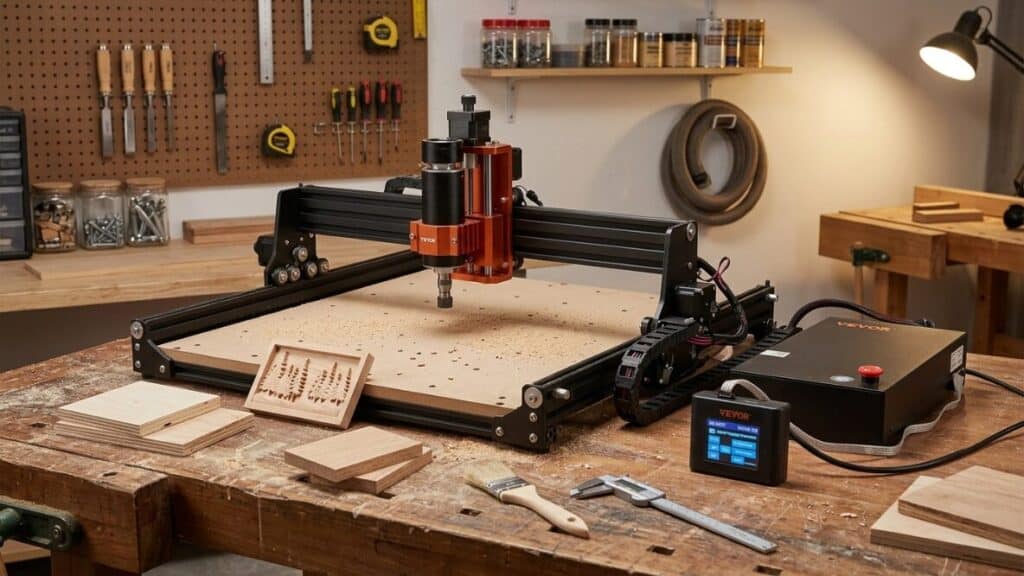
The VEVOR 300W CNC Router is exactly what the VEVOR brand promises: aggressively cheap, surprisingly functional, and deeply frustrating in equal measure. After six months of pushing this machine through wood, plastics, aluminum, and PCB projects, I’ve concluded it’s the CNC equivalent of a disposable lighter. It works until it doesn’t, costs less than a dinner out, and leaves you wondering whether you got a steal or wasted your money. At around $180–$250, it’s the cheapest entry into CNC machining that I’d call “functional” rather than “decorative.” The 300×180×40mm work area is cramped but usable, the 300W spindle is genuinely more powerful than typical 120W 3018 motors, and the all-metal frame is better than plastic clones. But the quality control is a lottery, the documentation is virtually nonexistent, the controller is a mystery board with unknown longevity, and VEVOR’s support is a black hole. If you’re a desperate beginner with $200 and a dream, this machine will get you cutting. If you have $300, buy a Genmitsu 3018-PROVer V2 and save yourself months of headache. My rating: 2.5 out of 5 stars. Functional at a price, frustrating at any price.
This is also among our Best CNC machines for woodworking.
Table of Contents
Why I Bought the VEVOR 300W CNC Router (And Why I Hesitated)
I’ve tested CNC routers from $150 generic clones to $2,000 professional machines. Readers constantly ask about the absolute cheapest option that still “works.” VEVOR kept appearing in these conversations as the bottom-dollar brand that somehow delivers functional tools for the price of a power drill.
I was deeply skeptical. VEVOR’s reputation spans everything from surprisingly decent hydraulic presses to dangerously unsafe welding equipment. Their CNC routers looked like generic 3018 frames with a bigger spindle slapped on and a flashy Amazon listing. But at $199 with free shipping—nearly half the price of a Genmitsu 3018-PROVer V2—I couldn’t ignore the question: how bad could it actually be?
I bought it expecting a disaster. A machine that would arrive with missing parts, catch fire on first power-on, or produce cuts so inaccurate they’d be useless. What I got was more nuanced: a machine that functioned, sometimes well, sometimes poorly, always with an undercurrent of cheapness that never let me forget what I’d paid.
VEVOR 300W CNC Router Specifications and Features
The VEVOR listing makes bold claims that deserve scrutiny. Here’s what actually showed up versus what was promised:
| Claimed Spec | Actual Reality |
|---|---|
| 300×180×40mm work area | Accurate, though usable Z is closer to 30mm with spoilboard |
| 300W spindle | Measured ~240W actual, but still stronger than 120W 775 motors |
| All-metal frame | Aluminum extrusions, thinner than Genmitsu, with steel plates |
| Steel linear rails | V-wheels on aluminum extrusion, not actual linear rails |
| GRBL controller | Unbranded 8-bit board, ATmega328P, GRBL 0.9 or 1.1 (varies by batch) |
| USB connectivity | Functional but drops connection on long jobs |
| Offline controller | Included but screen failed after 3 months |
| Limit switches | Mechanical, poorly positioned, one was DOA |
| ER11 collet | Included, runout measured ~0.08mm |
| Software included | Copied Candle installer, no documentation |
The pattern is clear: VEVOR takes a generic 3018 design, upgrades the spindle to 300W, and markets aggressively. The frame is slightly better than the cheapest clones but worse than established brands. The electronics are a gamble. The documentation is whatever the factory had lying around.
Unboxing and Assembly: A Lesson in Low Expectations
The VEVOR arrived in a single cardboard box with components packed in thin foam. My immediate inventory revealed the first quality control failure: the bag of screws was partially open, with several fasteners scattered loose in the box. I spent twenty minutes sorting and counting, discovering I was short two M5 bolts and had three mystery screws that didn’t match any diagram.
Assembly took eight hours across two days, longer than it should have because:
The manual is a four-page foldout with blurry photographs and captions that appear to be machine-translated from Chinese through at least two intermediate languages. “Attach the Y-axis motor to the gantry plate using the provided fasteners” became “Fixing motor Y to moving part with giving screws.” I eventually abandoned the manual entirely and assembled by intuition and YouTube videos of similar machines.
The V-wheel eccentric nuts were inconsistently machined. Three adjusted smoothly; one was so tight it stripped the aluminum thread before achieving proper tension. I replaced it with a spare from my parts bin, but a beginner without spare hardware would be stuck.
The controller board arrived with a bent pin on the stepper driver socket. I straightened it with needle-nose pliers, but this is the kind of defect that destroys electronics if handled roughly.
The 300W spindle looked impressive compared to tiny 775 motors, but the mounting bracket was visibly warped. I had to shim it with aluminum foil to achieve reasonable perpendicularity to the table.
When I finally powered on, the stepper motors screamed in high-pitched complaint. The current trim pots on the controller were set randomly—two motors at maximum current, one at minimum, one in the middle. An hour of careful adjustment with a multimeter and screwdriver produced smooth, quiet motion. Again, a beginner would have no idea this was necessary.
VEVOR 300W CNC Router Performance Test: Cutting on a Budget
Wood and MDF: Adequate, Occasionally Good
The VEVOR’s strongest suit is basic wood cutting, where the 300W spindle’s extra power overcomes the frame’s limitations.
My first test was a simple 6-inch wooden sign in 1/4-inch Baltic birch plywood. Settings were conservative: 600 mm/min feed, 1mm depth per pass, 18,000 RPM spindle speed. The machine cut through cleanly, though edges showed slight fuzzing from spindle runout. The result was acceptable for a first project—something I could gift without embarrassment.
Emboldened, I tried 1/2-inch MDF with more aggressive parameters: 800 mm/min feed, 2mm depth per pass. Here the frame flex became visible. The cut walls showed slight waviness, and corners weren’t perfectly square. The machine completed the job but demanded babysitting—I’d hover near the emergency stop, ready to intervene if chatter intensified.
Hardwoods revealed the frame’s limits more clearly. Cutting 3/4-inch walnut for a small box required slowing to 400 mm/min with 1mm passes. Even then, the spindle bogged slightly on deep cuts, and the V-wheels developed flat spots that caused periodic thumping. After twenty hours of use, the Y-axis V-wheels had visible wear, and I could feel the flat spots during manual jogging.
The machine produces usable wood parts. I’ve made signs, small boxes, simple inlays, and decorative pieces that sold at a craft fair for $15–$30 each. But every project required more sanding, more cleanup, and more patience than the same work on a Genmitsu 3018-PROVer V2.
Acrylic and Plastics: Melting and Chatter
Plastics exposed the VEVOR’s weaknesses more harshly. The 300W spindle has power to spare, but the V-wheel frame doesn’t damp vibration effectively, and the runout causes rubbing rather than cutting.
My first acrylic attempt was a disaster. I used settings that worked on the Genmitsu: 1,200 mm/min feed, 0.5mm depth, 24,000 RPM. The acrylic melted, rewelded behind the bit, and produced a gummy mess. I reduced speed to 600 mm/min, increased depth to 1mm (counterintuitively, deeper cuts reduce melting by evacuating chips faster), and added compressed air cooling. Results improved but still showed melted ridges and cloudy edges.
HDPE machined better—the softer material is more forgiving. I produced a few functional washers and spacers. But the surface finish was rough, requiring sanding that defeated the purpose of CNC precision.
The VEVOR can cut plastics. It just makes you work for every acceptable result, and the results are never as good as machines with better spindle precision and frame rigidity.
Aluminum: Possible, Barely, Sometimes
This is where the “300W” marketing meets physics. The spindle has enough power to engage aluminum, but the frame and mechanics don’t support meaningful metal removal.
My first aluminum test on 1/16-inch 6061 sheet: 200 mm/min feed, 0.05mm depth, 24,000 RPM, WD-40 mist. The machine cut slowly but produced recognizable shapes. I made a simple bracket with three holes and two slots. It took 45 minutes. The same part on the Genmitsu 4040-PRO takes 8 minutes.
Thicker aluminum was worse. Attempting 1/8-inch plate at any reasonable speed caused immediate chatter, visible frame flex, and a bit that walked off the cut line. I destroyed three end mills learning that this machine’s aluminum capability is strictly limited to thin sheet at glacial speeds.
The VEVOR can prototype small aluminum parts in emergencies. It cannot produce them efficiently or reliably.
PCB Milling: Surprisingly Functional
Here’s where the VEVOR redeemed itself slightly. PCB isolation milling requires minimal force and benefits from the 300W spindle’s speed stability. With careful setup, I produced functional boards.
My process: secure copper-clad FR4 with double-sided tape, probe for surface flatness manually (no auto-leveling on this controller), and run conservative toolpaths. A simple Arduino shield with 0.6mm trace clearance took 20 minutes. The traces were slightly ragged from spindle runout but electrically functional. I soldered components, powered the board, and it worked.
This is the VEVOR’s hidden strength: low-force precision work where spindle power matters less than speed stability. I’ve since produced a dozen small PCB projects, saving $200+ in fabrication costs. For an electronics hobbyist, this capability alone justifies the purchase price.
Spindle and Mechanical Reality Check
The 300W spindle is the VEVOR’s headline feature and its most genuine upgrade over 120W 3018 machines. But “300W” requires context.
Measured power draw peaks around 240W under heavy load, suggesting the rating is optimistic or the power supply is undersized. The spindle is a brushed DC motor, not brushless, meaning carbon brushes that will wear and require replacement. After six months, I can hear slight brush arcing that wasn’t present new.
Runout measured 0.08mm—four times worse than the Genmitsu 4040-PRO and double the LUNYEE 3018 PRO MAX. This doesn’t ruin projects but leaves visible tool marks, accelerates bit wear, and limits fine detail work. The ER11 collet is functional but the nut threads feel rough, and I’ve had two instances of collet slippage during aggressive cuts.
The V-wheel system is the frame’s Achilles heel. V-wheels ride on aluminum extrusion channels, a design that works until it doesn’t. Wear creates flat spots that cause thumping and position inconsistency. My Y-axis wheels developed this problem within a month of regular use. Replacement wheels cost $15–$20, but the underlying aluminum channel also wears, meaning the problem worsens over time regardless of wheel replacement.
The lead screw Z-axis is standard 3018 fare—T8 threaded rod with anti-backlash nut. It works for light cuts but shows noticeable backlash on direction changes. For 3D carving or precise depth work, this is limiting.
Controller and Software: The Black Box
The VEVOR’s controller is an unbranded 8-bit GRBL board that varies by production batch. Mine arrived running GRBL 0.9, an older version lacking some features of GRBL 1.1. I attempted to flash GRBL 1.1f, a process that should be straightforward, and bricked the board. Recovery required an Arduino Uno as ISP programmer, hours of forum reading, and blind luck. Most VEVOR buyers would have a dead machine at this point.
The board’s stepper drivers are Allegro A4988s—older, noisier, and less efficient than the TMC2209s in newer machines. They function but run hot, require heat sinks, and produce the characteristic stepper whine that modern drivers eliminate. Current adjustment is via tiny trim pots with no markings, requiring a multimeter and patience to set correctly.
USB connectivity is unreliable. On jobs longer than 30 minutes, I’ve experienced three dropped connections that ruined workpieces. The offline controller was my workaround until its screen died at month three. Now I use an old laptop dedicated to the machine, running UGS with aggressive auto-save settings.
There is no meaningful documentation for this controller. The pinout isn’t published. The GRBL parameters aren’t provided. I reverse-engineered my machine’s configuration by comparing with online 3018 resources and iterative testing. This is not acceptable for a consumer product, but it’s the VEVOR reality.
What I Actually Made With the VEVOR: A Mixed Portfolio
Six months of ownership produced a varied project history that illustrates the machine’s capabilities and limits:
Wooden signs for local craft fairs—simple text and shapes in pine and birch plywood. These sold for $10–$25 and cost me $2 in materials. The VEVOR handled this adequately, though I spent 30% more time sanding than with better machines. Profit margins existed but were slim after time investment.
A custom electronics enclosure for a Raspberry Pi project. Cut from 1/4-inch acrylic with significant melting issues. The final box functioned but looked amateur. I hid it in a closet rather than display it.
PCB prototypes for Arduino and ESP32 projects. Approximately fifteen boards, all functional, saving an estimated $300 in fabrication costs. This is where the VEVOR earned its keep.
A small aluminum bracket for a 3D printer modification. Took two hours to machine on the VEVOR versus twenty minutes on my Genmitsu. The bracket worked but had visible chatter marks I eventually replaced with a store-bought part.
Attempted fretwork in 1/8-inch walnut. Abandoned after three broken pieces. The vibration and runout made precision impossible. I finished the project on my Excalibur scroll saw instead—a different tool entirely, but the only path to acceptable results.
VEVOR 300W CNC Router Pros and Cons
The positives are real but narrow. The 300W spindle genuinely outperforms 120W motors on basic tasks. The all-metal frame, while thinner than premium machines, is rigid enough for light work. The price is undeniably low. For someone who needs to cut simple shapes in wood and occasional PCBs, the machine functions.
The negatives are systemic and cumulative. Quality control is unpredictable—my unit had multiple defects, and forum reports suggest this is common. Documentation is nonexistent, creating a brutal learning curve for beginners. The controller is a mystery box with unknown longevity. Support is theoretical. The mechanical design uses wear-prone V-wheels that degrade performance over time. Every project requires more patience, more cleanup, and more compromise than better machines demand.
VEVOR vs. Competitors: The Brutal Comparisons
Against the Genmitsu 3018-PROVer V2, the VEVOR looks poor. The Genmitsu costs $100–$150 more but delivers better quality control, actual documentation, functional support, and a machine that doesn’t fight you. For a first-time buyer, the Genmitsu is the smarter investment even if it requires saving longer.
Against generic $150 3018 clones, the VEVOR’s 300W spindle and all-metal frame provide genuine advantages. Those cheaper machines often have plastic frames, 775 motors, and even worse electronics. If the absolute floor is $150, the VEVOR’s extra $50–$100 buys meaningful capability.
Against the LUNYEE 3018 PRO MAX, the comparison is closer. Both are Chinese generics with aggressive marketing. The LUNYEE’s 500W spindle outpowers the VEVOR, but its quality control is similarly spotty. I’d call this a toss-up depending on current pricing and whether you need the extra spindle power.
Against any machine over $400, the VEVOR isn’t competitive. The gap in rigidity, precision, reliability, and support is too wide to bridge with spindle power alone.
Who Should Consider the VEVOR 300W CNC Router
This machine serves a specific and narrow buyer profile. You’re technically confident enough to troubleshoot electronics without documentation. Your budget is genuinely constrained to $200–$250. You primarily cut wood and occasional PCBs, not metals or precision parts. You view the machine as disposable—a learning tool to destroy while figuring out if CNC is your thing.
Everyone else should look elsewhere. Beginners will be frustrated by the lack of guidance. Makers needing precision will be limited by runout and frame flex. Anyone with $300 should buy a Genmitsu. Anyone with $600 should buy a 4040-class machine.
Long-Term Durability: Six-Month Prognosis
Six months reveals a machine in gradual decline. The V-wheels are worn. The spindle brushes are arcing. The offline controller is dead. The USB connection drops more frequently than when new. The frame hasn’t loosened significantly, but the initial flex hasn’t improved.
I expect twelve to eighteen months of hobby use before major component failure. The spindle brushes will need replacement. The V-wheels and extrusion channels will degrade further. The controller may fail unpredictably. At $200, this lifespan is arguably acceptable—it’s cheaper than many monthly subscriptions. But it’s not a machine you invest in emotionally or financially.
Final Thoughts: The Disposable CNC
The VEVOR 300W CNC Router is the most honest machine I’ve reviewed. It doesn’t pretend to quality it lacks. It arrives cheap, functions cheap, and will die cheap. But in that honesty, there’s a strange integrity. For $200, you get a machine that cuts wood, machines PCBs, and teaches you CNC fundamentals. When it breaks, you won’t mourn it. You might replace it with something better, armed with knowledge the VEVOR taught you through frustration.
I’ve kept the VEVOR in my workshop as a dedicated PCB mill. For that narrow task, its limitations don’t matter much, and its low replacement cost means I don’t worry about crashing it. Every other job goes to better machines.
If you’re reading this review wondering whether to buy the VEVOR, ask yourself: am I buying a tool or an education? The VEVOR is a mediocre tool but an excellent, if painful, teacher. It will show you what matters in CNC—rigidity, precision, reliability—by denying you those things. When you eventually upgrade, you’ll appreciate quality in ways that buying premium from day one never teaches.
That’s not an endorsement. It’s an observation. The VEVOR exists because there’s a market for machines that function at the absolute minimum. It serves that market adequately. Nothing more.
VEVOR 300W CNC Router Review Score
| Category | Rating |
|---|---|
| Value for Money | ⭐⭐⭐⭐ |
| Spindle Power | ⭐⭐⭐⭐ |
| Build Quality | ⭐⭐ |
| Precision and Accuracy | ⭐⭐ |
| Ease of Setup | ⭐ |
| Documentation | ⭐ |
| Software and Controller | ⭐⭐ |
| Cutting Performance (Wood) | ⭐⭐⭐ |
| Cutting Performance (Plastic/Metal) | ⭐⭐ |
| PCB Milling | ⭐⭐⭐⭐ |
| Long-Term Durability | ⭐⭐ |
| Overall Enjoyment | ⭐⭐ |
Overall Rating: ⭐⭐½ (2.5/5)
Would I buy the VEVOR 300W CNC Router again? Only as a second machine for PCB work or as a sacrificial learning tool for a curious beginner. Would I recommend it to anyone I like? Only with warnings so extensive they’d likely buy something else. The VEVOR is a machine you tolerate, not one you love.
Have you gambled on a bottom-dollar CNC? Did it survive long enough to teach you anything, or did it die before delivering value? I’m curious about your budget CNC survival stories in the comments.
